The infrastructure layer where crawler access is actually enforced. Its defaults reach a large share of the web, so its policy changes are the industry's, whether or not anyone voted.
Cloudflare is where crawler policy stops being an opinion and becomes a setting. Its data underpins much of this beat — automated requests crossed 57.5% of web traffic in June 2026, with 52% of AI crawler requests serving model training against 2.6% for live queries — and its products increasingly set the terms: Pay Per Crawl evolved into usage-based payments for AI search, and an Agent Readiness dashboard now scores domains on crawler rules, machine-readable content and agent-callable APIs. Because its defaults reach a large share of the web, a change to them is an industry event; IAB Australia built its four-verdict crawler matrix explicitly around Cloudflare's September 15 changes. The record is thin on one thing: what those defaults do to sites that are already customers, which Cloudflare's public documentation does not clearly say.
The wire's crawler access panel caught El País's homepage flip from a 200 to a 403 for GPTBot, ClaudeBot and PerplexityBot alike between the September 13…
wire analysis of Cloudflare's published posts — the scope for existing free customers is described differently by third-party summaries than by Cloudflare's own post, and Cloudflare has not clarified it
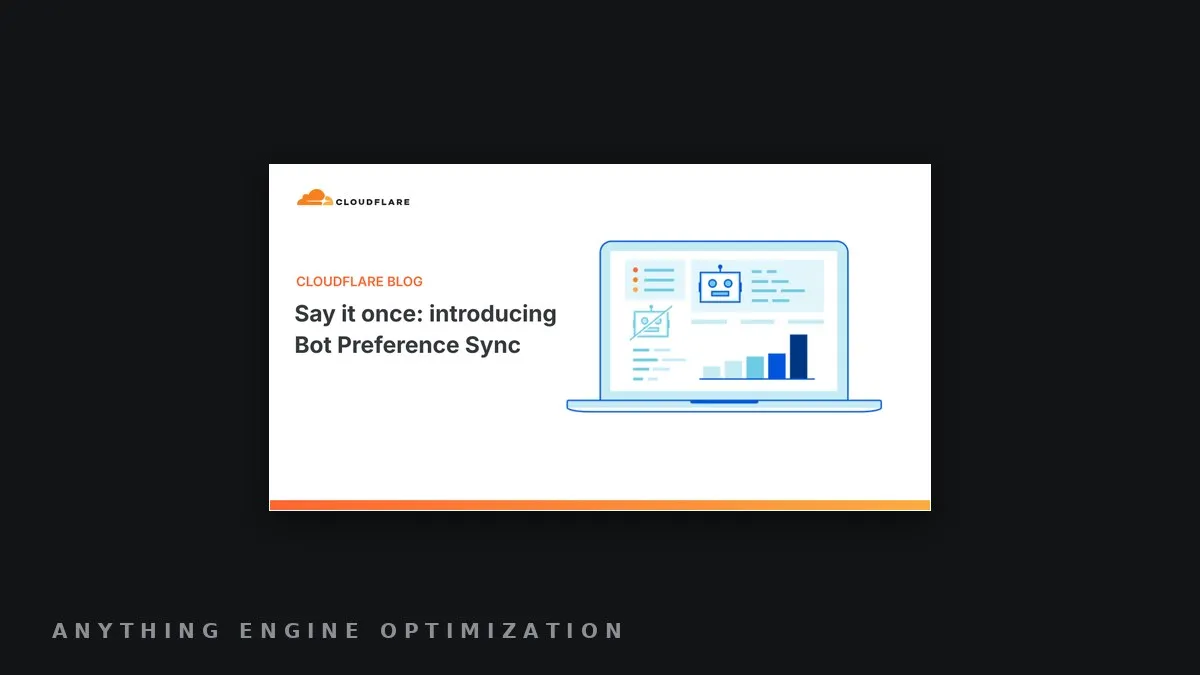
When Cloudflare launched Bot Preference Sync on August 21 it set four conditions a crawler doing both search and training must meet to keep reaching sites…
PatronView, a database of U.S. museum and cultural-institution donor records, blocked Amazon's Amzn-SearchBot crawler in early August after founder Nick…
Cloudflare added two tools to its dashboard on August 6: Agent Readiness, a technical audit of how well AI crawlers and agents can discover and read a…
IAB Australia published version 1.0 of its Bots and Crawler Guidance and Decision Matrix on July 22, 2026, unveiling it at the Discovery: AI and Search…
Time has converted its web pages into markdown — stripped-down, text-only copies without design or images — to make its content easier for AI crawlers and…